

Most PNP entrepreneur files address net worth and minimum investment thresholds clearly. But there's a third financial question officers are increasingly flagging — and it rarely appears on a standard checklist.
Read More53 items — blogs and news sharing this topic, most recent first.

Most PNP entrepreneur files address net worth and minimum investment thresholds clearly. But there's a third financial question officers are increasingly flagging — and it rarely appears on a standard checklist.
Read More
In 2026, PNP officers are applying a third scrutiny to job creation plans: can the local labour market actually supply the workers the business plan depends on? Here is what a defensible hiring plan looks like — and why most files fall short.
Read More
Most PNP intent-to-reside paragraphs read as marketing copy, not evidence. Here's what provincial reviewers actually check, why the gap gets missed, and how advisors should sequence the drafting process to close it before submission.
Read More
A complete 2026 guide to every active PNP entrepreneur stream in Canada — BC, Alberta, Manitoba, Saskatchewan, Nova Scotia, and the 2026 Ontario update. Covers eligibility thresholds, business plan standards, Stage 1 vs Stage 2 differences, and province selection strategy for immigration advisors.
Read More

Canada's federal, provincial, and territorial immigration ministers met June 23, 2026 to discuss the 2027–2029 Levels Plan and PNP allocations. Here is what the outcomes mean for C11, ICT, and PNP entrepreneur stream files right now.
Read More

A business plan can have solid financials, verified source of funds, and documented job creation — and still come back deferred. The gap is rarely in the numbers. It is in how the plan positions the enterprise relative to the province's economic priorities.
Read More

PNP entrepreneur stream timelines vary significantly by province in 2026. Here is a province-by-province breakdown of processing times, performance agreement periods, and total EOI-to-PR windows — and what they mean for business plan strategy.
Read More

A specific calculation error appears across PNP entrepreneur files more than any other documentation problem — a structural mismatch between projected revenue and projected headcount. Here is how to identify and fix it before submission.
Read More

Every active PNP entrepreneur stream in Canada ties the final nomination to employment outcomes. This guide breaks down province-by-province job creation thresholds, what counts as a qualifying position, Stage 1 vs. Stage 2 obligations, and how to build a job creation plan that holds up through the full performance review process.
Read More

IRCC issued an operational bulletin on June 9, 2026, allowing PNP nominees in Canada to apply for bridging open work permits and employer-specific work permits without needing an AOR. Here is what immigration professionals need to know about how this changes PNP file strategy.
Read More

PNP officers compare job creation commitments against ESDC labour market data. Most files miss this. Here is what Canada's 2026 labour force data signals — and how to build it into your client's business case.
Read More

Most advisors focus on making the market analysis section look comprehensive. The real evaluation is happening at a different level entirely — here is what PNP officers are actually assessing, and how to structure a section that answers their questions directly.
Read More

IRCC removed arranged employment CRS points in 2026, eliminating the 50-point Express Entry bonus that C11 and ICT work permit holders previously relied on. Here is what this change means for permanent residence strategy and how advisors should respond.
Read More

Most advisors focus on getting PNP entrepreneur stream approval. What happens after — the performance agreement, monitoring visits, and compliance milestones — is where files succeed or fail. Here is what practitioners need to know before the client lands.


Read More
PNP business streams are Canada's primary pathway for experienced entrepreneurs in 2026. This guide breaks down the core eligibility framework — net worth, investment, business experience, and adaptability — across BC, Alberta, Ontario, Manitoba, and Saskatchewan, with strategic guidance for immigration professionals advising clients on provincial entrepreneur programs.
Read More
Canada’s AI for All strategy announced a dedicated AI worker stream with 20-day work permit processing through the Global Talent Stream. Here’s what the announcement means for business immigration file strategy in 2026.
Read More
Community alignment is not a declaration section — it is an evidence section. Most regional PNP files say the right things and still fail because sincerity without specificity is not enough. Here is what officers actually look for.
Read More
Canada's PNP entrepreneur streams offer a direct pathway to permanent residency for foreign business owners in 2026. This guide covers every active provincial stream, eligibility thresholds, investment and net worth requirements, job creation standards, and how to match applicants to the right province.
Read More
Most PNP entrepreneur files focus on meeting the net worth threshold. The documentation gap that actually delays files is source-of-funds proof. Here is what officers are checking — and what strong files include.
Read More
Stating headcount in a PNP entrepreneur application is not a job creation plan. Officers evaluate five specific dimensions that most advisors miss — here is what each one requires.
Read More
Your client meets the net worth threshold on paper. So why is the file running into documentation friction? The answer is almost always in how financial assets are evidenced — not the amounts themselves. Here's what provincial officers actually look for, and how to build a financial documentation package that holds.
Read More
Every business plan has a market section. Most adjudicators can tell the difference between market research and market analysis — and only one of them supports a credible immigration file. Here is what practitioners need to know.
Read More
Job creation is one of the most underdocumented sections in PNP business applications. Here is what provincial officers are actually evaluating — and what a job creation plan needs to demonstrate to hold up under scrutiny.
Read More
A 3,800-person Alberta community. A 50% RCIP retention rate. Zero rental vacancy as the intake ceiling. NCIC 2026's rural session delivered data that reframes rural Canada as a serious business immigration strategy.
Read More
A refusal letter is not the end of a file. NCIC 2026 Session 3 breaks down the triage decision: when to request reconsideration, when to reapply, and when judicial review is the right call — including the 15-day and 60-day deadlines practitioners need to know.
Read More
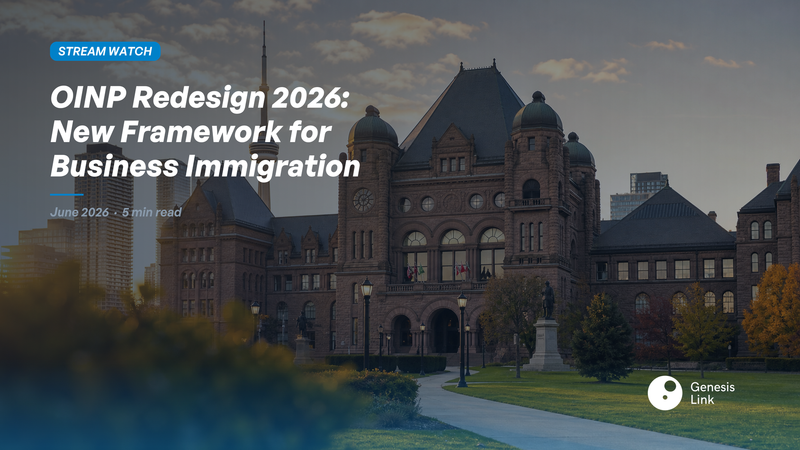
Ontario's regulatory amendments to the OINP took effect May 30, 2026, activating the groundwork for a full program redesign. Here is what immigration professionals need to know about the new entrepreneur stream, grandfathering, and how to position files now.
Read More
Clearing the minimum investment threshold in a PNP business stream does not satisfy the financial requirement. Here is what provincial officers actually evaluate — and how to build a business case that holds up.
Read More
Meeting the provincial net worth threshold is the starting point, not the finish line. What actually determines whether a PNP entrepreneur file holds up under due diligence is the verification methodology behind the number — source of funds, investable capital, currency conversion, and encumbrances.
Read More
IRCC's Express Entry reform consultation closed May 24, 2026. The proposed CRS overhaul reshapes how immigration professionals should position C11, PNP, and ICT files. Here is what the changes mean for your active caseload.
Read More
Most PNP business applications include job creation projections. Provincial assessors look for something more specific: job creation logic. Here's what that distinction means for file strategy — and for performance agreement compliance.
Read More
Most advisors know the net worth threshold. Fewer understand what provincial reviewers actually verify — and how to document it in a way that holds up under scrutiny.
Read More
A business plan consultant for Canadian visas builds immigration-grade documentation for C11, PNP, and ICT applications — not a generic writer, but a compliance-focused partner to your immigration team.
Read More
IRCC's public consultation on merging FSW, CEC, and FST into a single program and reweighting the CRS closes May 24, 2026. Here is what it means for C11, ICT, and PNP entrepreneur file strategy.
Read More
Canada's 2026 Levels Plan boosted PNP nominations by 66% to 91,500 — the largest single-year increase in the program's history. For immigration professionals advising entrepreneur clients, this reallocation changes how files should be positioned, timed, and built. Here is what advisors need to know.
Read More
Most PNP business stream deferrals trace to the same root cause: a well-written business plan inside a file that was never built as a business case. Here is the five-layer framework every immigration professional needs to understand.
Read More
On May 30, 2026, all nine OINP stream categories — including the Entrepreneur stream — will be revoked under O. Reg. 47/26. Here is what immigration professionals need to review before the deadline and how to reposition client files.
Read More
Provincial officers don't evaluate a net worth number — they evaluate the methodology behind it. Here are the four documentation layers that determine whether a PNP entrepreneur file holds up under review.
Read More
Meeting the provincial net worth threshold means the file stays in review — it does not mean the financial component is complete. Here is what officers actually verify: liquidity, source of funds, and asset classification.
Read More
IRCC officers are increasingly identifying templated and AI-assisted business plans in immigration files. Here is what triggers the credibility flag, what it costs a file, and how practitioners can build documentation that holds up to scrutiny.
Read More
Stage 1 nomination does not validate your business plan — it sets the contract of intent. Here is what provincial officers and IRCC actually evaluate at Stage 2, and how to build a file that holds up.
Read More
Ontario is revoking all nine OINP stream categories on May 30, 2026, under O. Reg. 47/26 — including the Entrepreneur stream. Here is what immigration professionals need to review before the deadline.
Read More
The Canada Startup Visa is paused for new applicants in 2026. This complete guide covers every section a startup visa business plan must include, what designated organizations assess, and which active pathways remain open for entrepreneur immigrants.
Read More
Most PNP entrepreneur files meet the published net worth minimum. Far fewer can document it to a provincial standard. Here is the verification methodology advisors need to understand before a file moves forward.
Read More
The Start-Up Visa is paused. The Self-Employed Persons Program is on hold. A new federal pilot is coming — but not yet. Here is the complete picture of Canada's entrepreneur immigration landscape in 2026.
Read More
Effective March 30, 2026, new federal regulations exclude PNP nominees whose nomination was based on passive investment. Here's what the new genuine management standard means for your files.
Read More
Net worth verification in PNP entrepreneur streams is not an accounting exercise — it is a credibility assessment. Most files submit a balance-sheet snapshot. Provincial officers are running a three-layer source-of-funds analysis. Here is what the verification standard actually requires, province by province.
Read More
Ontario is replacing all nine OINP streams by May 30, 2026. The redesigned Entrepreneur Stream shifts from passive investment plans to active business ownership and job creation — here is what immigration professionals need to understand before files advance.
Read More
On May 30, 2026, Ontario revokes all nine OINP streams and replaces them with a fundamentally different architecture. The redesigned Entrepreneur Stream shifts from startup plans to business succession cases — changing what immigration professionals need to document and how.
Read More
Effective April 30, 2026, IRCC raised PR fees across all immigration categories. The business-class fee sees the steepest increase — up $85 to $1,895. Here is what every immigration advisor needs to review and update right now.
Read More
Saskatchewan's 2026 SINP caps food service at 25%. Manitoba removed hospitality from its retention pilot. BC's tech stream has been permanent since 2021. The data across Canada's provincial entrepreneur streams shows a deliberate shift in what provinces actually want — and most applicants are still filing the old playbook.
Read More
Starting April 30, IRCC raises permanent residence fees across every PR category. Here is what business immigration advisors need to review, recalculate, and act on before the deadline.
Read More
IRCC opened public consultations on April 23, 2026, proposing the biggest Express Entry overhaul since 2015. Here is what the proposed CRS changes and program merger mean for your business immigration clients on C11, ICT, and PNP pathways.
Read More
Business-class PR applications face the largest fee hike (+$85 to $1,895) effective April 30, 2026 at 9 AM Eastern. PNP fees also rise by $40. Applications submitted and paid before the deadline lock in current rates. Here is what immigration professionals need to review today.
Read More