


OINP Workforce Priority Scoring and Entrepreneur Stream Status, July 2026
Ontario published Workforce Priority scoring (up to 130 points) in July 2026 and confirmed entrepreneur remains a future stream without a launch date. What advisors should do now.

Last reviewed: 19 August 2026. Scoring details and stream status: ontario.ca OINP. OWP EOI later opened 4 August 2026; entrepreneur still unavailable as of last review.
In late July 2026 Ontario published scoring guidance for the Workforce Priority stream (public materials described a grid up to about 130 points across factors such as region, TEER, wage, Ontario experience, and language). The province also continued to list Entrepreneur among redesigned streams without a launch date. On 4 August 2026, OWP EOI opened while other streams stayed closed.
What was published
- Workforce Priority scoring factors for invitation competitiveness
- Confirmation that multiple streams sit in the new OINP structure
- No operative entrepreneur intake as of last review
How the scoring grid is built (briefing level)
Points reward human-capital and job attributes Ontario prioritizes (location, skill level, wage, experience, language). Model scores only from the live guide. Do not invent weights from memory in client emails.
Entrepreneur stream status
Until Ontario opens entrepreneur intake with rules and a portal, owner-operator clients need other lanes: federal C11/ICT where facts fit, or entrepreneur streams in provinces that are actually receiving files (subject to capacity).
What our files show. The costliest mistake after scoring publication was pausing all Ontario entrepreneur conversations without offering an alternate federal or out-of-province business path. Scoring is useful for employer-driven candidates; it is not an entrepreneur bridge.
Advisor actions
- Use OWP scoring only for genuine employer-offer candidates
- Keep entrepreneur clients on documented alternate pathways
- Re-read ontario.ca weekly for stream open/close changes
FAQ
Can high OWP points help a founder without an employer?
OWP is not designed as a self-employed founder stream. Get licensed advice before forcing a structure.
Author: Sajad Bahramian, Marketing and Sales Lead, GenesisLink. GenesisLink is a business consulting firm; we do not provide immigration legal advice. Confirm figures on primary government pages before you brief a client or file.
Recent News

 October 19, 2026

More on Provincial programs (PNP)
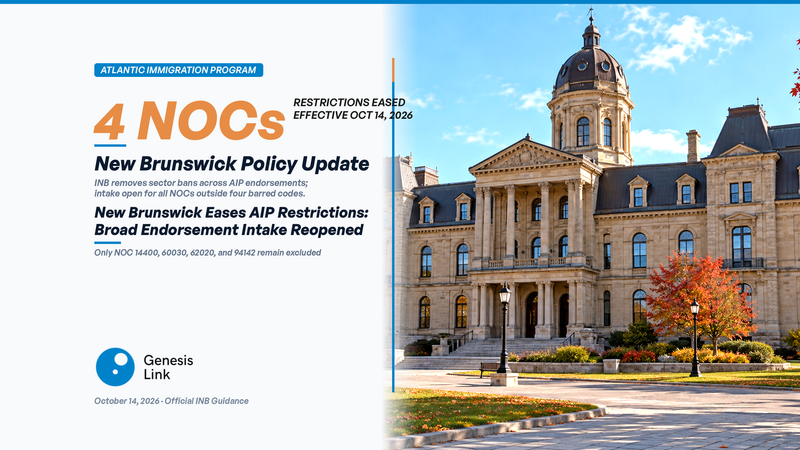 NewsNew Brunswick Eases Atlantic Immigration Program Restrictions: Endorsement Intake Reopened Across Most NOCs
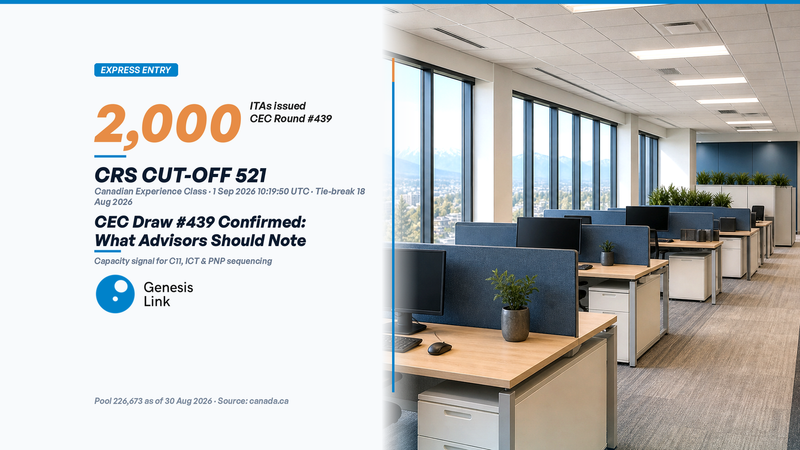 NewsExpress Entry CEC Draw 439 Confirmed: 2,000 ITAs at CRS 521-1 September 2026
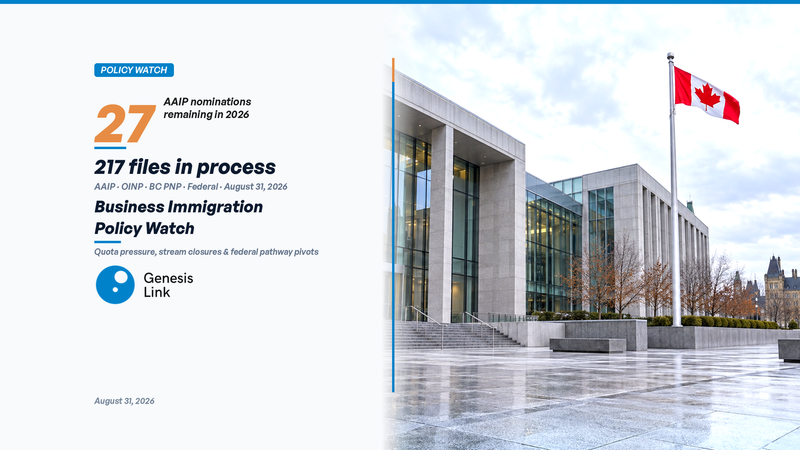 NewsBusiness Immigration Policy Watch, August 31, 2026
 BlogBusiness Immigration File Review Insights August 2026: 3 Practitioner Patterns in C11, ICT, and BC PNP Applications
 BlogCanada Business Immigration News August 2026: Provincial Stream Allocations & Federal Pathway Calibration
Discussion
Be the first to comment.
Add a comment